Louisiana has given the world many famous food products, from hot sauces and Creole seasonings to coffee and pralines. But among these beloved products is one humble kitchen staple that has earned a special place in Southern homes: Blue Plate Mayonnaise. The story of Blue Plate began in New Orleans in 1927, when the Wesson Oil & Snowdrift Company introduced a mayonnaise that would become one of the South's most recognizable food brands. Known for its rich, creamy texture and distinctive flavor, Blue Plate became a favorite among home cooks. New Orleans was a fitting birthplace for such a product, as the city already possessed one of America's richest culinary traditions, shaped by generations of French, Spanish, African, and Caribbean influences. In Louisiana, food has always been more than nourishment. It represents family, tradition, and community, and Blue Plate soon became part of that tradition.
For generations, Louisiana families have used Blue Plate to prepare potato salad for Sunday dinners, deviled eggs for holiday gatherings, and sandwiches for everyday meals. It became especially familiar in Louisiana kitchens, where a good mayonnaise is considered essential for everything from seafood dishes to classic po'boys. The brand also became part of New Orleans' industrial history. For decades, Blue Plate was manufactured at a factory on South Jefferson Davis Parkway, now Norman C. Francis Parkway, in Mid-City New Orleans. The factory served as a reminder that the city was not only famous for its restaurants but also for producing food products enjoyed throughout the South. Although mayonnaise production eventually moved elsewhere, the historic factory building survived and was later converted into the Blue Plate Artist Lofts, preserving an important piece of the city's commercial past.
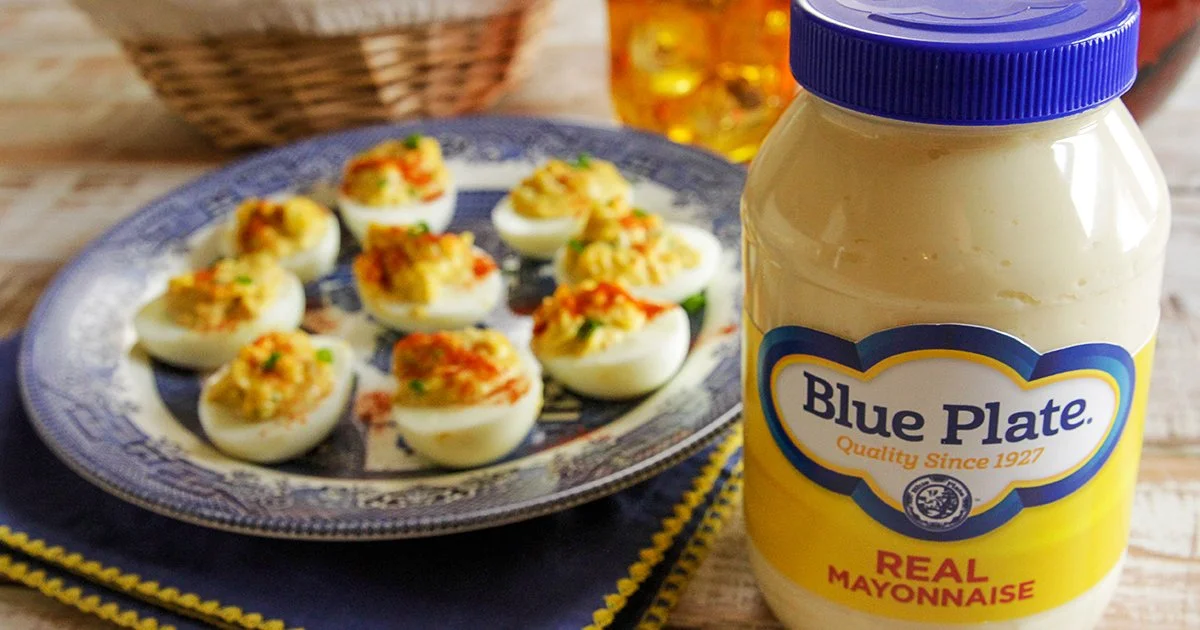
What makes Blue Plate particularly interesting is the loyalty it inspires. In many Louisiana households, mayonnaise is not simply mayonnaise. Families have their preferred brand, and those preferences are often passed from one generation to the next. For some, the taste of Blue Plate brings back memories of a grandmother's potato salad, a homemade tomato sandwich on a summer afternoon, or a family gathering where the kitchen was always the busiest room in the house. Those memories are part of what makes Louisiana's food culture so special. Blue Plate belongs to a remarkable group of Louisiana-born brands, including Community Coffee, Crystal Hot Sauce, Zatarain's, and Tony Chachere's, that helped bring the state's distinctive flavors into homes far beyond its borders.
As Blue Plate approaches its 100th anniversary in 2027, its story reminds us that Louisiana's culinary heritage is not found only in famous restaurants or elaborate Creole dishes. Sometimes it lives in the simplest ingredients, quietly connecting generations through familiar recipes and shared meals. From its beginnings in New Orleans in 1927 to its lasting popularity across the South, Blue Plate Mayonnaise has become more than a grocery-store product. It is a small but enduring piece of Louisiana history, and for many families, a familiar taste of home.
Blue Plate Mayonnaise. “The Delicious History of the South’s Favorite Mayonnaise.” Blue Plate Mayonnaise, https://blueplatemayo.com/about/. Accessed 22 Oct. 2026.“Blue Plate Go Bold Sauces.” Rouses Supermarkets, https://www.rouses.com/about/blog/blue-plate-go-bold-sauces/. Accessed 22 Oct. 2026.“Blue Plate Artist Lofts.” HRI Properties, https://www.blueplatelofts.com/. Accessed 22 Oct. 2026.Paterson, Seale. “Blue Plate.” St. Charles Avenue, 1 Nov. 2016, https://www.myneworleans.com/blue-plate/.“Simple, Time-Honored Mayonnaise Ingredients.” Blue Plate Mayonnaise, https://blueplatemayo.com/about/ingredients/. Accessed 22 Oct. 2026.