From Avery Island to Tables Around the GlobeDeep in the heart of southern Louisiana, surrounded by marshlands, ancient salt deposits, and the rich cultural traditions of Acadiana, a simple combination of peppers, salt, and vinegar gave rise to one of the most recognizable food products in the world. Tabasco sauce, first commercially produced in 1868, became far more than a condiment. It grew into a symbol of Louisiana's culinary identity, an enduring family enterprise, and an internationally recognized brand whose distinctive flavor has crossed cultural and geographical boundaries for more than a century and a half.
The story of Tabasco is inseparable from the history of Louisiana itself. Its development reflects the state's agricultural traditions, its relationship with the Gulf Coast environment, the economic transformations following the Civil War, and the entrepreneurial ambitions of a family whose product would eventually reach consumers across the world. What began as a small operation on Avery Island developed into a global business, demonstrating how a regional food tradition could become an international phenomenon without losing its connection to its place of origin.
Avery Island, located in Iberia Parish near New Iberia, is not a conventional island surrounded by open water. Rather, it is a prominent geological formation rising above the surrounding coastal wetlands, formed by an enormous underground salt dome. The area's elevation, fertile soil, and natural resources made it distinctive within southern Louisiana's landscape. Long before Tabasco sauce existed, Indigenous peoples recognized the importance of the region's salt resources. Over time, the area became associated with agricultural activity, salt production, and the families who acquired and developed property there.
During the nineteenth century, Avery Island became closely connected to the Avery and McIlhenny families. Edmund McIlhenny, a Maryland-born businessman who had established himself in Louisiana, married Mary Eliza Avery, whose family owned property on the island. The American Civil War disrupted the region's economy and transformed the social and agricultural systems upon which many Louisiana families had depended. In the difficult years following the conflict, McIlhenny began developing the pepper sauce that would establish his lasting reputation.
The origins of Tabasco sauce have become part of Louisiana culinary folklore. According to the company's traditional account, McIlhenny experimented with small, intensely flavored red peppers grown on Avery Island. He recognized that their sharp heat and distinctive taste could be transformed into a flavorful sauce capable of enhancing a wide variety of foods. Rather than relying on elaborate ingredients, he developed a preparation that emphasized the natural character of the peppers.
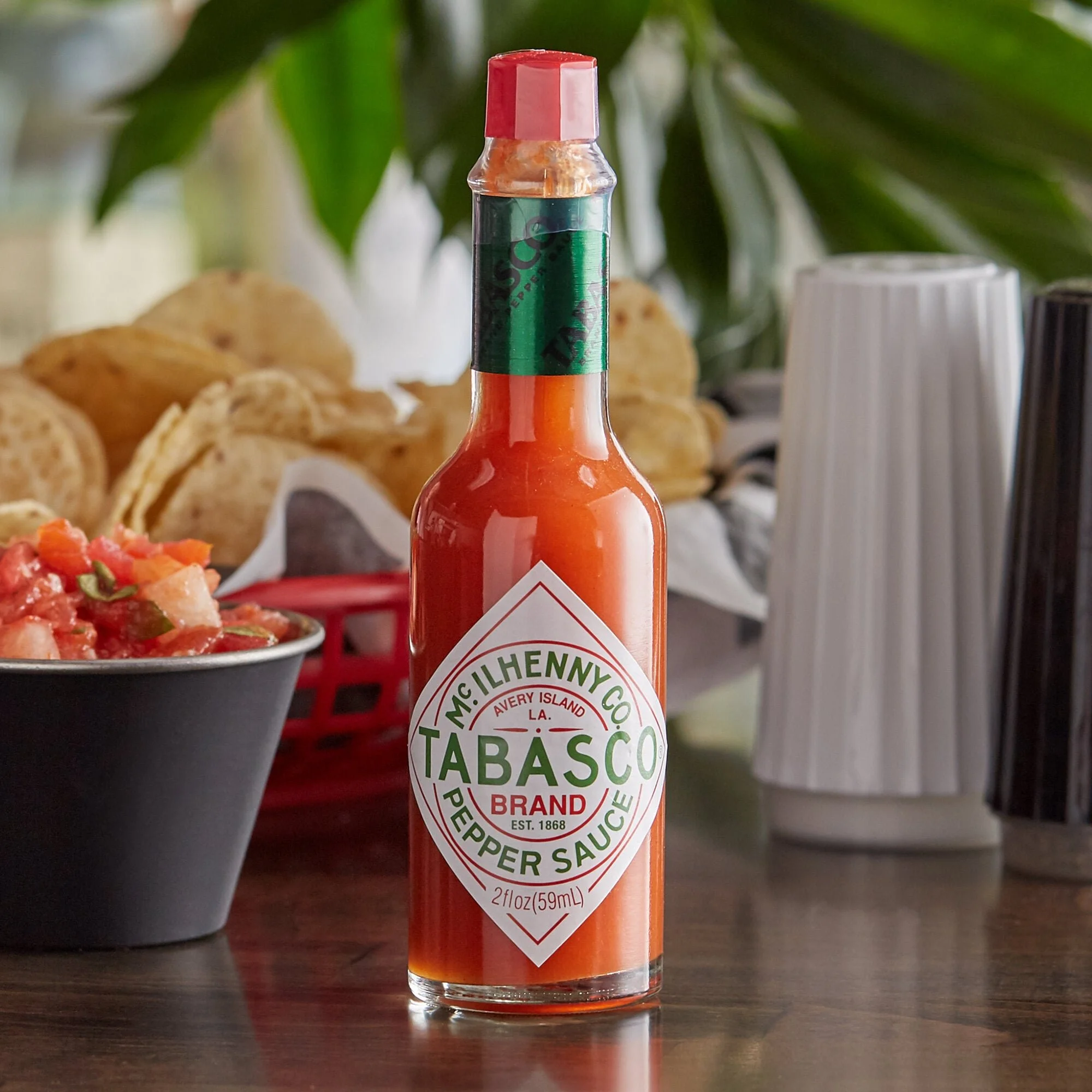
Tabasco Sauce, Avery Island
The original recipe was remarkably simple, consisting of three primary ingredients: tabasco peppers, salt, and distilled vinegar. The peppers were crushed into a mash, combined with salt, and allowed to age before being blended with vinegar. This process produced a thin, concentrated sauce distinguished by its bright acidity, pronounced pepper flavor, and intense heat. Unlike thicker pepper sauces, Tabasco was designed to be used sparingly, with a few drops capable of changing the character of an entire dish.
In 1868, Edmund McIlhenny began commercially producing his pepper sauce, marking the beginning of what would become the McIlhenny Company's most famous enterprise. Early production was modest, and the sauce was packaged in small glass bottles that helped distinguish it from other condiments. The narrow-necked bottle also allowed consumers to dispense the concentrated sauce in controlled amounts. Its recognizable shape would eventually become one of the most enduring features of the brand.
The name Tabasco was associated with the Mexican state of Tabasco, although the precise history of its adoption as the sauce's name has been the subject of differing accounts. Whatever its original inspiration, the name became closely associated with the Louisiana product. By the late nineteenth century, Tabasco was developing a reputation beyond its birthplace, aided by commercial distribution, advertising, and the growing demand for distinctive seasonings.
Louisiana's culinary culture provided a natural environment for the sauce's popularity. The state's food traditions had developed through centuries of interaction among Indigenous peoples, Africans, Europeans, and Caribbean communities. French and Spanish colonial influences combined with African culinary knowledge, Indigenous ingredients, and later immigrant traditions to produce a regional cuisine known for its complex seasonings and distinctive flavors. Peppers had long been important in many of these foodways, making a concentrated pepper sauce a useful addition to Louisiana cooking.
Tabasco found a place alongside dishes such as gumbo, jambalaya, red beans and rice, seafood stews, and other regional specialties. Its acidity and heat could complement rich gravies, seafood, vegetables, and slow-cooked meats without requiring substantial changes to traditional recipes. Although Tabasco did not create Louisiana's preference for bold seasonings, it became one of the products most closely associated with that culinary reputation.
As demand increased, the McIlhenny family expanded production and developed a commercial network capable of reaching customers well beyond Louisiana. The company's growth coincided with major changes in American transportation, manufacturing, and retail commerce. Railroads, steamships, improved packaging, and expanding wholesale networks made it increasingly practical for regional food manufacturers to distribute their products nationally and internationally.
By the late nineteenth and early twentieth centuries, Tabasco sauce had established a presence in markets outside the United States. Its distinctive bottle, recognizable label, and concentrated flavor helped distinguish it from competing condiments. The sauce's ability to complement different culinary traditions contributed to its international appeal, allowing consumers to incorporate it into dishes far removed from the food culture of southern Louisiana.
The company's success also reflected a commitment to consistency. Maintaining a recognizable flavor across generations required careful attention to pepper cultivation, ingredient selection, fermentation, and blending. Although agricultural methods and manufacturing technology evolved, the original red pepper sauce continued to rely on the same three basic ingredients that defined McIlhenny's early product.
One of the most distinctive aspects of Tabasco production is its aging process. Ripe peppers are harvested, crushed, and mixed with salt to create a mash. The mash is then placed in oak barrels, where it ages for as long as three years. During this period, fermentation and maturation contribute to the development of the sauce's characteristic flavor. After aging, the pepper mash is blended with distilled vinegar, further refined, and prepared for bottling.
The use of salt carries particular historical significance because Avery Island itself is a salt dome. The area's salt resources were important long before Tabasco production began, and salt remains a fundamental ingredient in the sauce. This connection between geology, agriculture, and food manufacturing gives Tabasco a distinctive relationship with the Louisiana landscape.
Although Tabasco is closely associated with Avery Island, its agricultural operations eventually expanded beyond Louisiana. To meet growing international demand, the company developed pepper-growing operations in other regions with suitable climates. Nevertheless, Avery Island remained the center of production, where pepper mash was aged, blended, and bottled. The continued involvement of the McIlhenny family helped preserve the company's identity as a Louisiana-based enterprise despite its worldwide reach.
The history of Tabasco also contains questions about the origins of its recipe. While Edmund McIlhenny is credited with establishing the commercial brand, he was not the first person in Louisiana to cultivate tabasco peppers or prepare pepper sauces. Maunsel White, a prominent Louisiana planter and businessman, was associated with a tabasco pepper sauce before McIlhenny established his enterprise. Historical accounts differ regarding whether McIlhenny developed his recipe independently or drew inspiration from earlier preparations. These questions do not diminish the importance of his commercial achievement, but they place Tabasco within a broader Louisiana tradition of pepper cultivation and sauce-making rather than treating it as an entirely isolated invention.
Throughout the twentieth century, Tabasco became increasingly familiar to American consumers, appearing in restaurants, grocery stores, hotels, and military dining facilities. Its connection to American military life became particularly notable as small bottles of the sauce accompanied service members far from home. For soldiers eating repetitive field rations, a few drops of pepper sauce offered an opportunity to add flavor to otherwise ordinary meals. This association contributed to Tabasco's reputation as a portable and dependable seasoning, reinforcing its popularity among consumers who valued convenience and consistency.
As the company expanded internationally, Tabasco developed into one of Louisiana's most successful culinary exports. According to McIlhenny Company, its products are sold in more than 195 countries and territories, with labeling in numerous languages and dialects. The familiar bottle has become recognizable across national borders, appearing in restaurants and households whose culinary traditions differ substantially from those of Louisiana. Its success demonstrates the remarkable ability of a regional food product to find a place within an increasingly interconnected global marketplace.
The brand also expanded beyond its original red pepper sauce, introducing additional varieties designed to appeal to changing consumer preferences. These products incorporated different peppers and flavor profiles while retaining the Tabasco name. Yet the original red sauce continued to serve as the foundation of the company's identity. Its combination of fermented peppers, salt, and vinegar remained a defining characteristic, distinguishing it from many competitors in the expanding hot sauce industry.
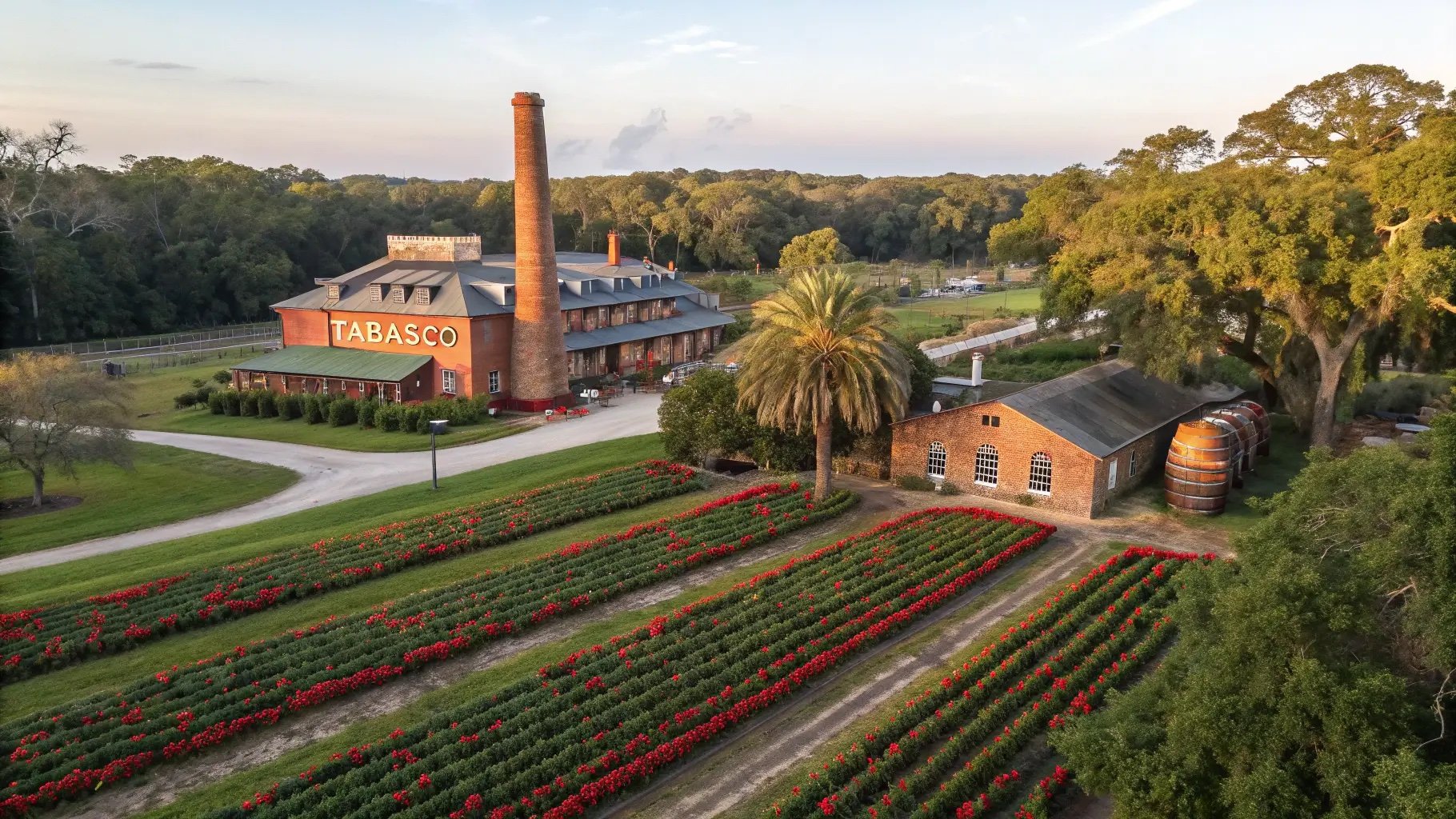
Avery Island, Louisiana
Avery Island itself became an important destination for visitors interested in Louisiana history, food production, and the natural environment. The Tabasco factory and museum provide opportunities to explore the company's history and manufacturing process, while the surrounding landscape offers another perspective on the region's cultural and ecological heritage. Nearby Jungle Gardens, developed through the conservation interests of Edmund McIlhenny's son Edward Avery McIlhenny, reflects the family's long association with the island's wildlife and natural surroundings. Together, these attractions have helped establish Avery Island as both an industrial landmark and a destination for heritage tourism.
The continued operation of the McIlhenny Company also illustrates the importance of family-owned businesses in Louisiana's economic history. While many nineteenth-century enterprises disappeared, merged with larger corporations, or relocated their operations, Tabasco maintained a strong connection to the community where it originated. Generations of family leadership, employees, agricultural workers, and production specialists contributed to the company's development. Their work transformed a relatively small pepper sauce operation into an enduring commercial institution.
More than 150 years after Edmund McIlhenny began producing his pepper sauce, Tabasco remains closely identified with Louisiana. Its history reaches beyond the familiar bottle and its distinctive flavor. It encompasses the aftermath of the Civil War, the development of southern agriculture, the growth of American manufacturing, the expansion of international commerce, and the preservation of a family business across generations.
In many respects, the history of Tabasco mirrors Louisiana's broader cultural identity. The state has long been shaped by the meeting of different peoples, agricultural traditions, culinary practices, and commercial ambitions. Its cuisine emerged through centuries of adaptation and exchange, producing foods and flavors that became recognized far beyond its borders. Tabasco represents one of the clearest examples of that influence, carrying a recognizable element of Louisiana's culinary heritage into kitchens around the world.
What began on Avery Island in the nineteenth century became a product whose name would eventually be recognized across continents. Through economic change, international competition, technological advancement, and shifting consumer tastes, Tabasco retained its association with the place where its commercial history began.
McIlhenny Company. “Our History.” TABASCO Brand, www.tabasco.com/tabasco-history/. Accessed 10 Oct. 2026.McIlhenny Company. “Original Red Sauce.” TABASCO Brand, www.tabasco.com/products/hot-sauces/original-red-sauce/. Accessed 10 Oct. 2026.Orser, Charles E., Jr., and David W. Babson. “Tabasco Brand Pepper Sauce Bottles from Avery Island, Louisiana.” Historical Archaeology, vol. 24, no. 3, 1990, pp. 107–14.Rothfeder, Jeffrey. McIlhenny's Gold: How a Louisiana Family Built the Tabasco Empire. Collins, 2007.Smithsonian National Museum of American History. “Tabasco and the War against Bland Military Meals.” National Museum of American History, www.americanhistory.si.edu/explore/stories/tabasco-and-war-against-bland-military-meals.